Seven-night sleep pattern profile

A week of sleep can show a pattern. It cannot explain the cause.

A seven-night sleep report helps you place comparable nights side by side: recording timing, available data coverage, snoring, movement, wakefulness and notes. It is a way to organise observations for personal review or a professional conversation, not a diagnosis or a sleep study.

Why look beyond one night?

One poor night can reflect a late bedtime, a cold, travel, stress, alcohol, a changed routine, a noisy room or incomplete recording. Looking across several nights can make a repeated timing or disruption easier to describe. It cannot prove why that pattern happened.

Begin with comparability

Before comparing scores or charts, check each recording window and the available sample coverage. A shorter recording, a phone placed differently, a wearable that was not worn consistently, or missing data may make a night less comparable. Treat the report as a summary of the evidence captured, including its limits.

Describe timing, not a condition

A profile may show recurring periods of snoring, snore clusters or disturbed-breathing signals, movement or wakefulness. Use this language to say what was recorded and when. Those observations do not confirm sleep apnoea, insomnia, a breathing disorder or another condition.

Use notes to add context

Notes can make a report more useful: bedtime, wake time, illness, travel, exercise, alcohol, medication changes, sleep position, partner observations, and how you felt the next day. They help identify questions worth tracking without turning correlation into a conclusion.

A careful seven-night reading order

Turn seven nights into a clear description.

Use the same sequence each time so that the report supports useful follow-up rather than over-interpretation.

1. Mark the incomplete or unusual nights

Flag nights with missing coverage, a clearly different recording setup, illness, travel, a late event or another unusual circumstance. They may still be useful, but they should not be treated as a direct like-for-like comparison.

2. Look for repeated timing

Ask whether a signal appears at a similar time across several reasonably comparable nights. Repeated timing can be a useful observation for your notes. It is not evidence of a specific cause or a prediction of health risk.

3. Read signals together

Review sleep continuity, snoring, movement, wakefulness and any permission-based wearable context together. A comprehensive sleep report is clearer when it shows what was available, what was not, and how each signal sits beside the rest of the night.

4. Prepare one useful next question

You might decide to keep the recording conditions more consistent, add a brief morning note, or discuss a recurring observation with a qualified healthcare professional. For report-specific reading tips, see how to read a sleep report PDF.

Example profile

See the shape of a multi-night report.

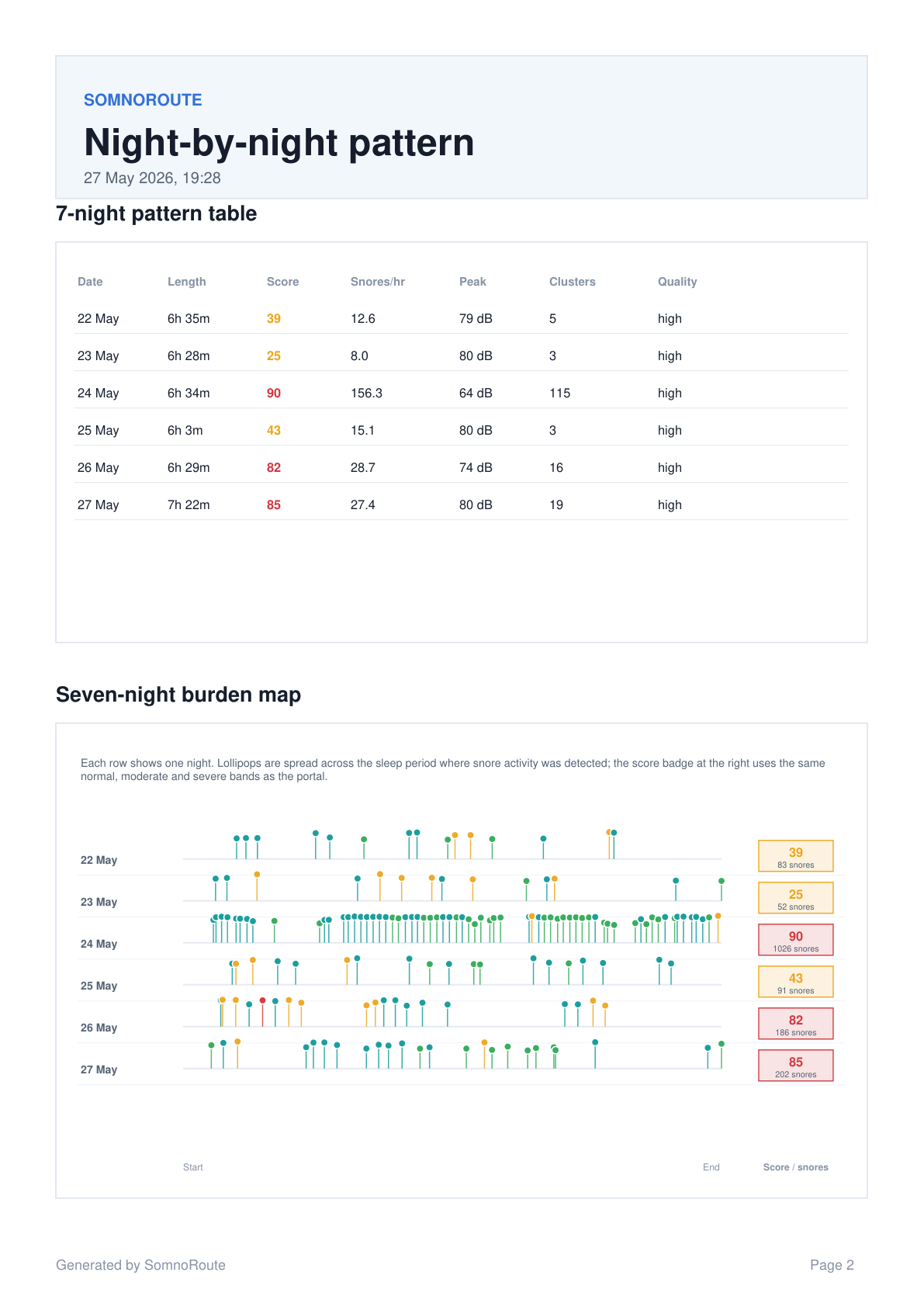
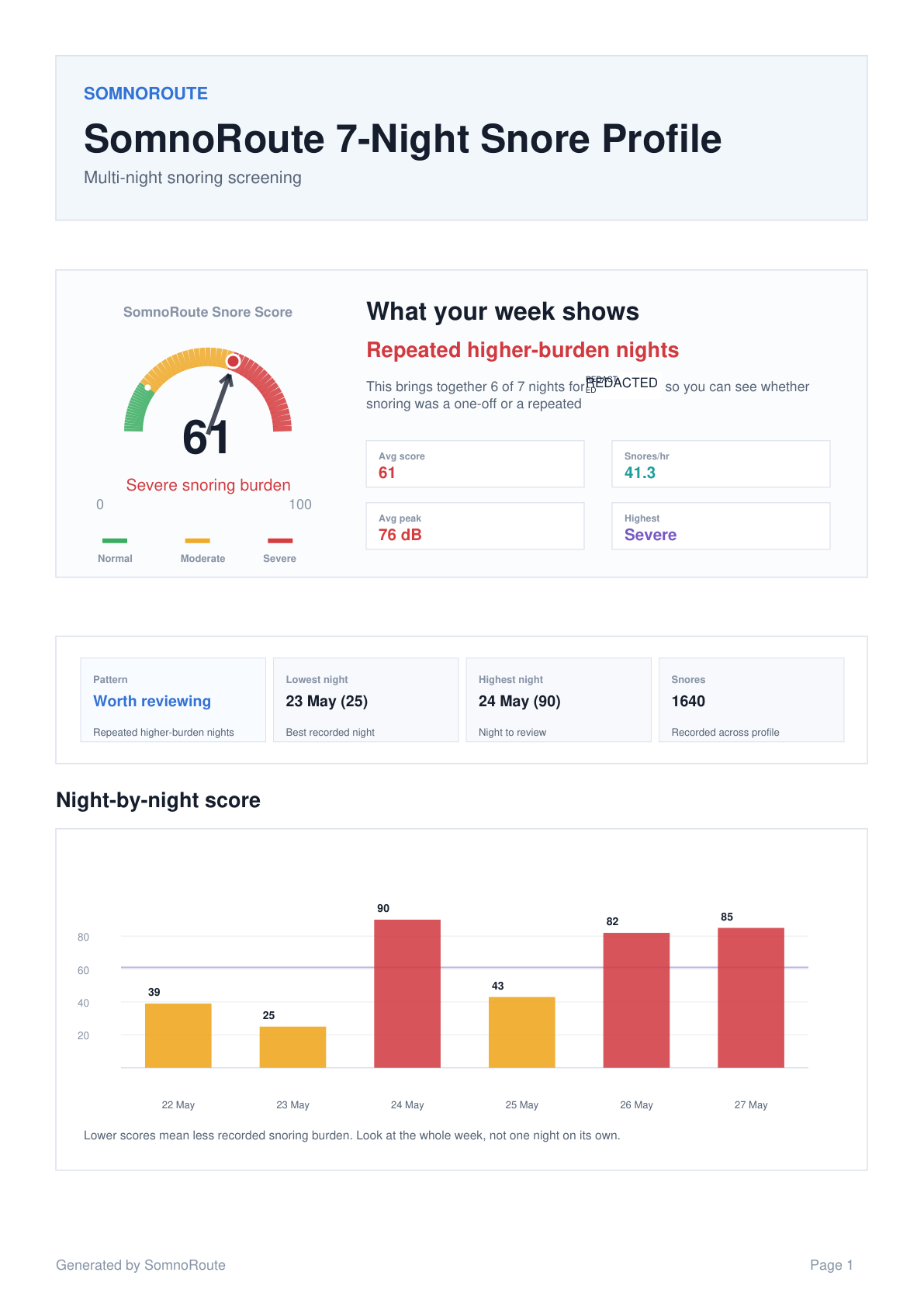
This synthetic example shows the format of a seven-night profile. It does not represent a real person or establish a medical conclusion.

First page of an example SomnoRoute seven-night sleep profile Second page of an example SomnoRoute seven-night sleep profile
Example only

Seven-night sleep pattern profile

The example profile is a synthetic, server-calculated format for reviewing sleep timing, snoring, movement, wakefulness, coverage and notes across several nights. SomnoRoute is currently pre-launch and accepting private-beta interest.

Open the example PDF

Seven-night report FAQ

Useful context, clear limits.

What is a seven-night sleep report?

It brings several comparable recordings into one view, so you can review timing, coverage, snoring, movement, wakefulness and notes as a pattern instead of relying on one night.

How should I compare seven nights of data?

Start with the recording window and coverage, then compare broadly similar nights alongside notes about routine or anything that may have affected sleep.

Can a seven-night sleep report diagnose a condition?

No. It can organise observations and highlight patterns to discuss, but it does not diagnose sleep apnoea, insomnia, breathing disorders or any medical condition.

When should I seek professional advice?

Speak with a qualified healthcare professional about loud persistent snoring, witnessed breathing pauses, choking or gasping, repeated disrupted sleep, daytime sleepiness, morning headaches, poor concentration, high blood pressure or cardiovascular risk factors.